Japanese Sword with Mei “出羽大掾藤原國路” — Scholarly Analysis
Extended scholarly study of "Japanese Sword with Mei “出羽大掾藤原國路”" (accession JCA.2026.048): material analysis, authentication methodology, comparative works, and bibliography.
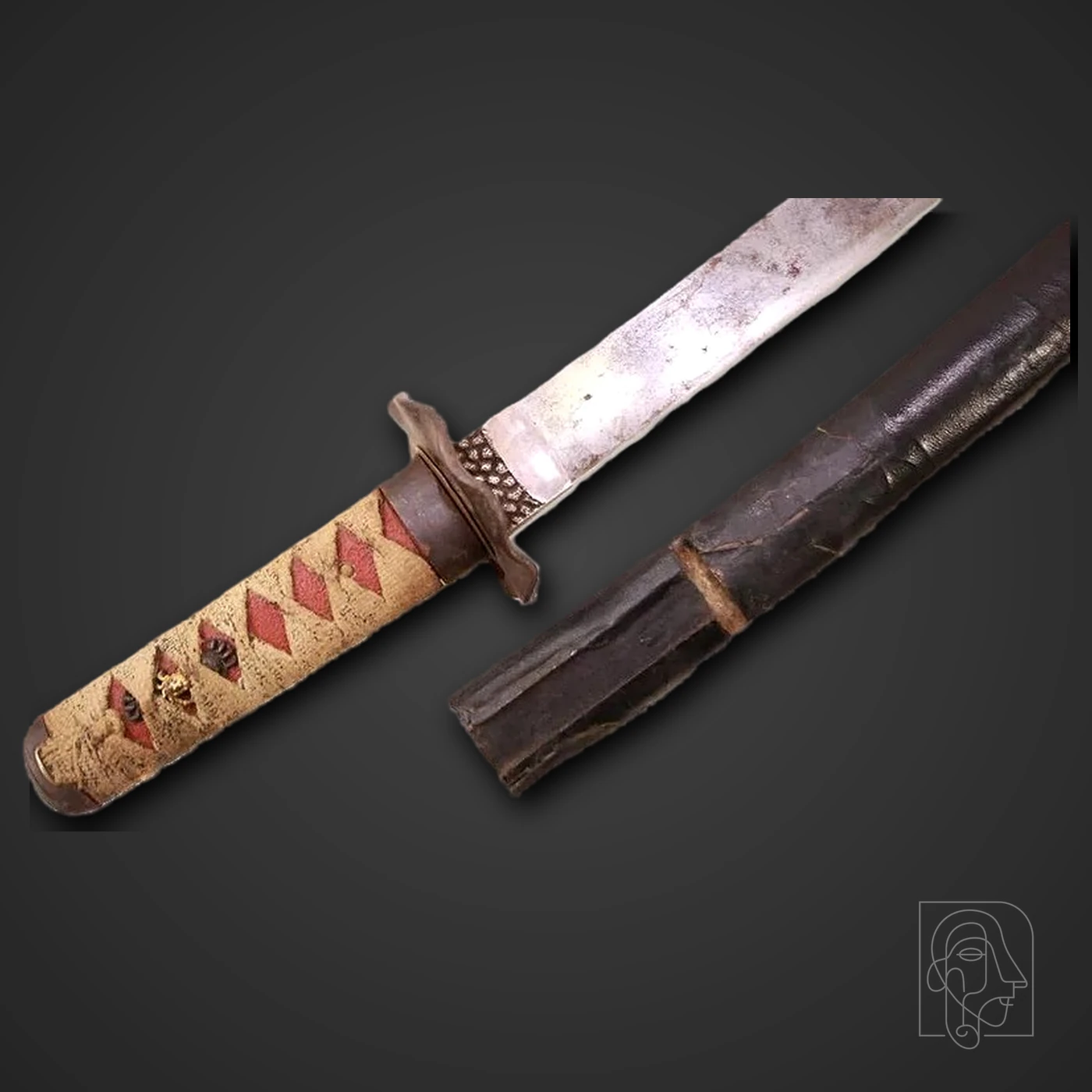
Extended description
This Japanese sword preserves an ubu nakago bearing the eight-character inscription 出羽大掾藤原國路, presently read on a working basis as Dewa Daijō Fujiwara Kunimichi. The mei is arranged in a single vertical column and combines an honorary court title (出羽大掾), a Fujiwara lineage element (藤原), and the smith name (國路), a documented form associated with Kunimichi. The blade is mounted in traditional Japanese sword furniture, including an iron sukashi tsuba, copper-alloy habaki, and a tsuka retaining samegawa beneath the wrap. In its current condition, the blade exhibits age-related oxidation and surface wear, yet retains sufficient structural and inscriptional detail to warrant continued study. Photographic examination suggests a hira-zukuri blade form rather than shinogi-zukuri, with no clearly defined shinogi ridge or yokote visible in the present condition. A hamon remains visible and appears to exhibit a notare- to gunome-influenced character, while the boshi reportedly continues into the kissaki and turns back in a manner consistent with a preserved temper pattern. The nakago retains deep, stable patination and appears ubu, with a single mekugi-ana intersecting the inscription. The mei is boldly cut, with substantial surviving chisel work visible despite corrosion and surface accretion. Character-by-character examination of the inscription has strengthened the present reading, particularly the identification of 大 in the third position, supporting the court-title reading 出羽大掾 rather than alternative reconstructions. Based on the presently observable features, the sword is best understood as a probable early Edo-period Japanese blade carrying a working attribution to Dewa Daijō Fujiwara Kunimichi of the Horikawa-Mishina tradition. The attribution should remain provisional pending comparison with authenticated oshigata, specialist in-hand examination, and ideally NBTHK or NTHK shinsa.
Technical analysis
The blade appears to exhibit a ridged Japanese sword geometry, although the present condition and available photography do not permit a definitive determination of blade construction. A visible hamon survives beneath current oxidation and surface wear. In the available photographs, the hamon presents as a notare/gunome-leaning pattern rather than a straight suguha and retains sufficient visibility to suggest an active temper line consistent with traditionally forged Japanese workmanship. Surface condition presently limits evaluation of jihada, nie, nioi, and other hataraki. The lower portion of the blade is particularly affected by oxidation and visual obscuration, making a full kantei-level technical assessment impossible without professional examination and, potentially, restoration polish.
Authentication methodology
This attribution has been developed through a layered, evidence-based process combining direct visual inspection, owner-confirmed stroke tracing, inscriptional reconstruction, structural analysis of Japanese sword signatures, and comparison to documented signature variants attributed to Dewa Daijō Fujiwara Kunimichi. The reading was not fixed at the outset; earlier alternate reconstructions were tested and then revised as better photographic evidence became available. The present conclusion represents the strongest integrated reading currently supported by the inscription and by comparative reference material. The key methodological turning point was the identification of the third character as 大. Once confirmed, this materially strengthened the reading of the opening title block as 出羽大掾 rather than a personal-name structure. Subsequent comparison of the lower characters supported the reading 藤原國路, with the final character read most plausibly as 路 rather than 道 or 造. The resulting eight-character sequence, 出羽大掾藤原國路, aligns with a documented Kunimichi title-signature pattern and provides a historically coherent title + lineage + smith-name formula. This remains a provisional attribution. The current analysis is based primarily on photography rather than oshigata or in-hand expert examination, and the blade remains in a condition that prevents full assessment of kantei-critical traits such as jihada, boshi, and the detailed character of nie and nioi. Accordingly, this object is best described as a probable Kunimichi candidate supported by inscriptional and stylistic compatibility, not as a fully authenticated sword. Formal confirmation should proceed through oshigata, specialist review, and ideally NBTHK shinsa.
Comparative works
The most relevant comparanda are authenticated blades and oshigata attributed to smiths signing Dewa Daijō Fujiwara Kunimichi / 國路 within the early Edo Horikawa–Mishina milieu. Comparison should focus on the complete mei layout, individual chisel strokes, nakago shape and yasurime, blade geometry, jihada, hamon, and boshi rather than matching isolated characters. Published sword-reference databases and specialist literature can provide candidate examples, but dealer attributions are not substitutes for papered oshigata. The decisive comparative corpus should be NBTHK- or NTHK-authenticated examples examined by a qualified nihontō specialist.
Provenance
The earlier ownership history of this sword remains incompletely documented and should presently be treated as unconfirmed. The object is therefore best understood within the framework of current physical evidence rather than supported by a fully developed chain of custody. No claim of continuous lineage, institutional history, or pre-modern documentation should be attached to the piece without additional documentary support. That said, the sword preserves several internally significant indicators of age and authenticity potential. The ubu-looking nakago, stable patination, deeply cut inscription, and traditional mounting components together provide an evidentiary base independent of external ownership history. In the absence of a fully documented provenance trail, the strongest current interpretive value lies in the object’s inscriptional and material record. Future provenance research should focus on acquisition history, any associated mounts or storage materials, prior sales records, possible dealer or collector annotations, and any reverse-side tang markings or dates that may survive on the ura. Even modest provenance additions could materially strengthen the interpretive and market context of the sword.
Historical context
If the current reading is correct, this sword belongs within the early Edo-period world of the Horikawa school, a major Kyoto-centered movement that helped define the early Shintō era. Horikawa Kunihiro and his students synthesized earlier traditions, especially Sōshū influences, into a refined and highly active style that was both technically ambitious and culturally prestigious. A sword carrying the title 出羽大掾 and the Fujiwara lineage block would fit well within the social language of early Edo sword culture, where court titles and lineage associations signaled artistic legitimacy, status, and connection to recognized traditions. The title 出羽大掾 should not be read as a literal statement that the blade was forged in Dewa Province. Rather, it is best understood as an honorary court title attached to the smith’s formal name, part of the literate and status-conscious naming culture of the period. Likewise, 藤原 functions less as a modern genealogical claim than as a prestige-bearing lineage element embedded in sword-signature practice. Taken together, these elements place the mei within a sophisticated title-signature tradition associated with higher-level early Edo workmanship. The smith name 國路, read Kunimichi, situates the piece within a line of documented blades that bridge formal signature practice and active technical workmanship. If confirmed, the sword would represent not only a named early Edo blade but also an example of how inscription, title, lineage language, and visible forging style intersected within the Horikawa artistic environment.
Conservation history
The sword is presently in aged but studyable condition. The nakago retains substantial patina and surviving inscription depth, but corrosion and surface accretion obscure portions of the mei and complicate precise character reading in several areas. The blade itself shows oxidation, staining, and general surface wear, with the lower portion especially affected. Despite this, the hamon remains visible enough in photographs to support preliminary stylistic observations. No invasive cleaning, polishing, or restoration should be undertaken by a non-specialist. The nakago patina is an important evidentiary surface and should not be cleaned or disturbed. Likewise, any attempt to brighten or abrade the inscription would risk damaging the very information needed for authentication. At this stage, conservation priorities are stabilization, careful handling, and documentation rather than intervention. The recommended next conservation action is professional assessment by a qualified togishi or nihontō specialist. A proper polish, if advised by a specialist, could significantly improve visibility of the hamon, jihada, boshi, and other kantei-level characteristics. Before any polish is undertaken, however, a high-quality oshigata of the nakago should be made so that the inscription is documented in its current state.
Bibliography
Aoi Art / Aoi Japan. Dealer and museum-style listings for signed Dewa Daijō Fujiwara Kunimichi blades, used as comparative references for title format, workmanship character, and market context. Markus Sesko. Published research and reference discussions on Kunimichi and related dated signature variants, including the documented transition in the “michi” character. Nihonto Club. KUN481 reference entry for Dewa Daijō Kunimichi, used as the principal catalog framework for the current working attribution. nihonto.com. Reference article on Kunimichi, used for comparative remarks on mei carving style, nakago characteristics, and school context. NBTHK (Nihon Bijutsu Tōken Hozon Kyōkai). Standard authority for formal sword authentication and certification; cited here as the recommended next step for confirmation rather than as a source directly certifying this blade. Primary object evidence: owner-supplied photography of the blade, nakago, mei closeups, and annotated character-tracing images used in the present reconstruction.