The Pointed-Headdress Figure — Scholarly Analysis
Extended scholarly study of "The Pointed-Headdress Figure" (accession JCA.2026.049): material analysis, authentication methodology, comparative works, and bibliography.
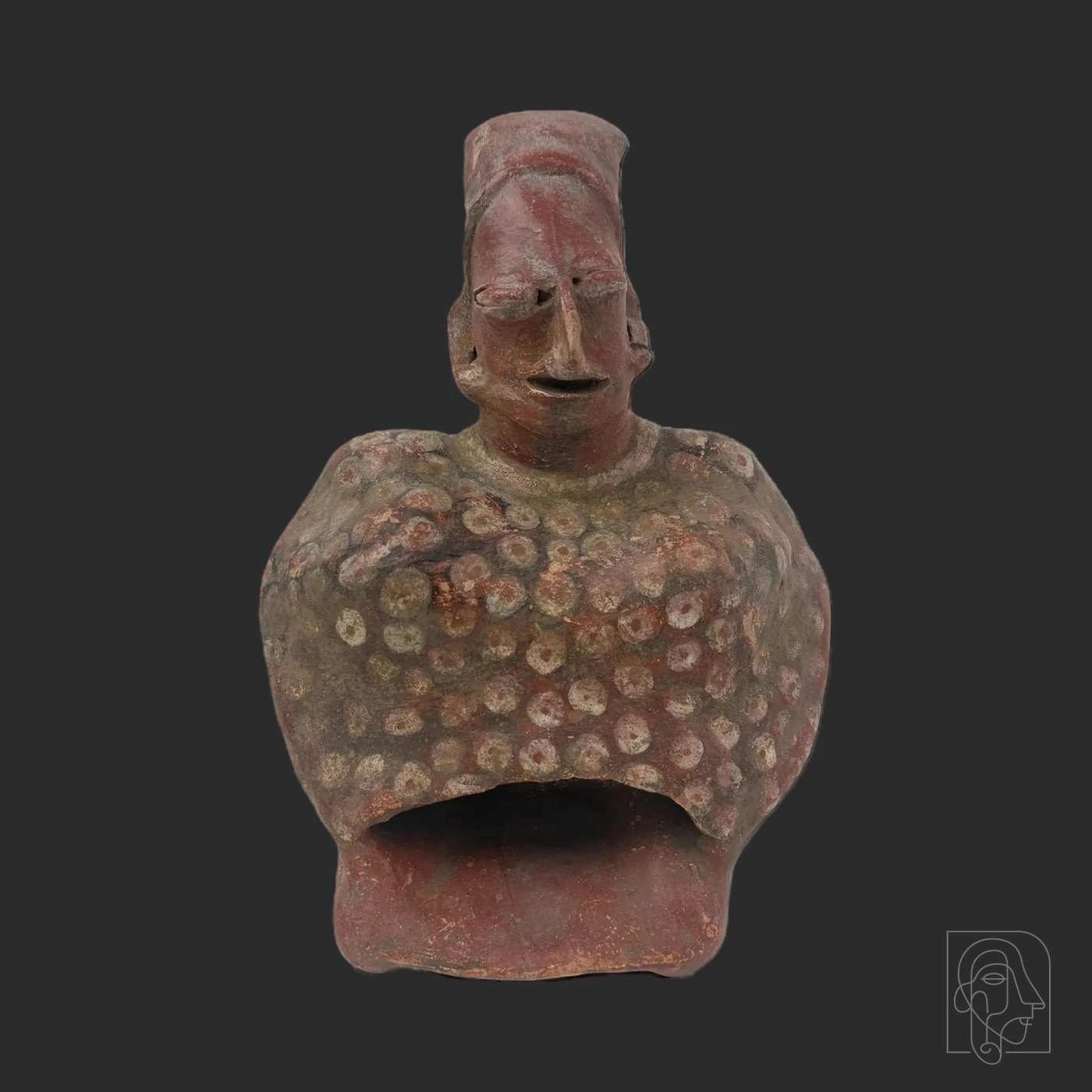
Extended description
The figure combines a modeled human bust, pointed headdress, perforated ear ornaments, and hollow ceramic construction with a front cavity. Rear apertures and a basal opening are recorded in the catalog, but their communication with the cavity has not been demonstrated. The owner specifically reports that the eye perforations do not connect to the front cavity. These features support description as a hollow anthropomorphic figure; they do not yet identify a censer, smoke vessel, or named ritual object. West Mexican and Nayarit stylistic comparisons remain provisional, and no excavated context or laboratory firing date is documented.
Technical analysis
Technical assessment should distinguish openings made during manufacture from later damage and establish which openings, if any, communicate internally. Hollow construction can have several purposes and is not sufficient evidence of controlled airflow or burning. No confirmed combustion residue, heat alteration, or functional smoke path is documented. Surface coloration and accretions require material characterization before they can support claims about firing, burial, or use history.
Authentication methodology
The present assessment is a provisional visual and structural comparison with Mesoamerican ceramic figures. Irregular modeling, clay fabric, wear, and accretions can guide examination but do not independently establish a pre-Columbian firing date. Internal imaging, residue characterization, specialist comparison, and provenance review would help test the competing interpretations. Thermoluminescence, if appropriate for the ceramic and sampling context, would address the last firing event rather than identify the original function.
Comparative works
LACMA's Nayarit incense burners (M.86.296.47) and the later Xantil censers in the Metropolitan Museum of Art and Princeton University Art Museum demonstrate different ways human imagery and ceramic vessels could be combined. They are comparative examples, not identifications of JCA.2026.049. Differences in morphology, chronology, internal communication, and documented function must be retained; the current record does not establish that this figure is a Xantil or an incense burner.
Provenance
The object is reported to have been held previously by Barakat Gallery. No invoice, inventory number, named earlier collector, excavation record, source-country documentation, export history or pre-1970 chain is currently attached to the public record. “Former Barakat Gallery” is therefore modern reported provenance only. It cannot establish where the object was made, excavated or first collected, and no shaft-tomb or funerary provenance should be inferred from the stylistic comparison.
Historical context
Human-form ceramics could combine sculptural representation with vessel construction in several Mesoamerican traditions. Interpretation of this figure should remain open until its internal structure and any use residues are documented. No particular deity, named ceremony, funerary setting, or community of use is established. West Mexican stylistic parallels are research leads rather than archaeological provenance.
Conservation history
No formal conservation or restoration treatment is documented. The object is recorded as structurally intact with mineral accretions and pigment remnants. Do not wash, soak, mechanically descale or remove pigment/accretions before scientific examination because those surfaces may preserve evidence relevant to manufacture, burial history and later treatment. Support the hollow body and projecting ear elements during handling. Any thermoluminescence sampling should be planned with a conservator and taken from a discreet area after complete photographic documentation.
Bibliography
Los Angeles County Museum of Art, M.86.296.47, “Incense Burners,” Nayarit, 200 BCE–500 CE. Metropolitan Museum of Art, 1978.412.10, “Xantil (deity censer),” Eastern Nahua, 1200–1521 CE. Princeton University Art Museum, 2006-16, “Xantil (deity censer),” 1350–1521, with discussion of perforations allowing smoke to issue from the body. Museo Regional de Nayarit / INAH, overview of western Mexican shaft-tomb archaeology and associated ceramic offerings. These sources establish comparative forms and regional archaeology, not provenance for JCA.2026.049.