Dunhill Rollagas Butane Lighter (Textured Finish) — Scholarly Analysis
Extended scholarly study of "Dunhill Rollagas Butane Lighter (Textured Finish)" (accession JCA.2026.056): material analysis, authentication methodology, comparative works, and bibliography.
Extended description
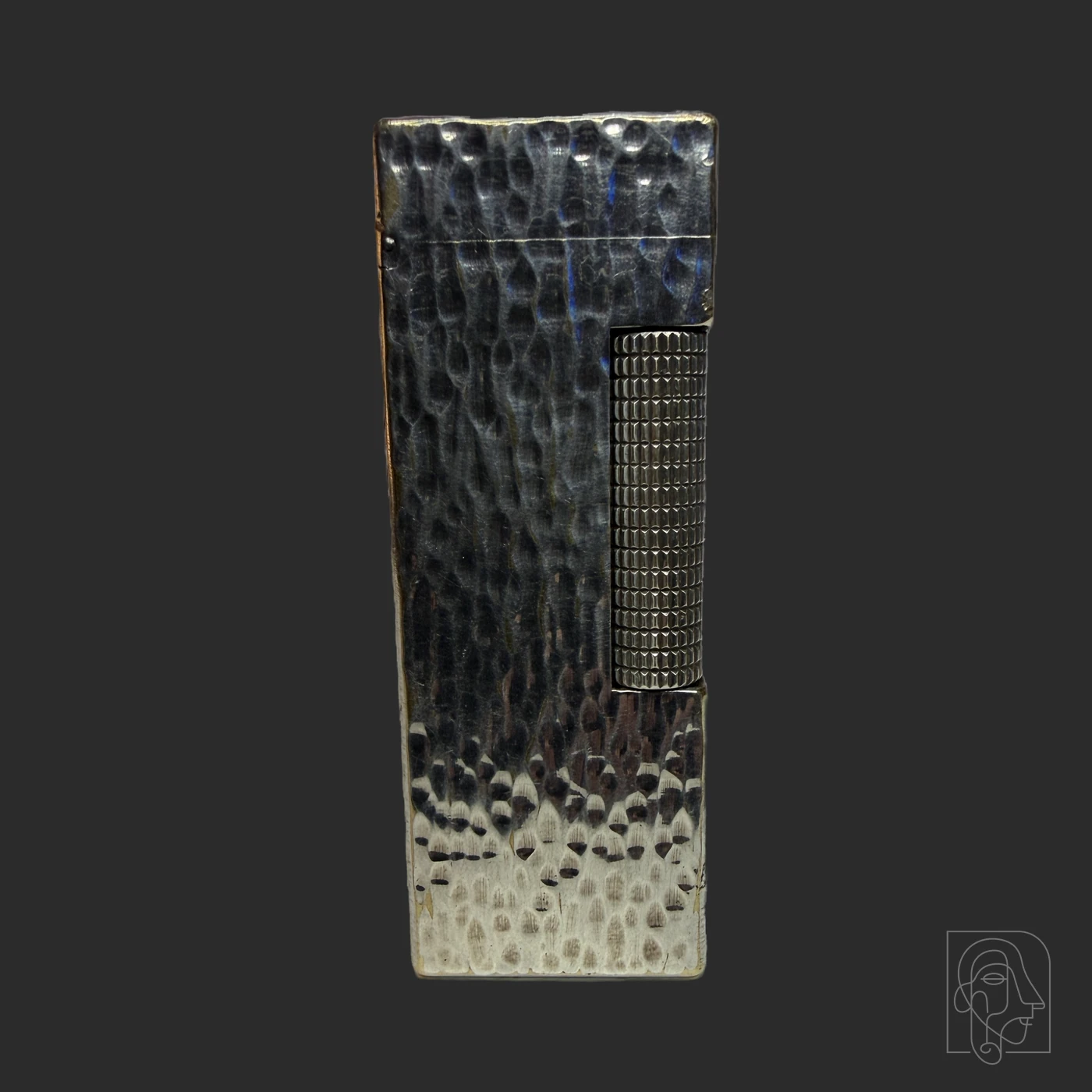
Rectangular Dunhill Rollagas butane pocket lighter with a gold-colored, irregularly dimpled or bark-like exterior. Recorded features include a hinged lid, side-mounted ignition roller, flint ignition assembly and internal butane reservoir. The base bears “dunhill,” “MADE IN SWITZERLAND,” and “US RE 24163 PATENTED.” The texture varies in depth and spacing, but this does not establish a hand-applied hammering process or the sequence of finishing. Operation was recorded at cataloguing; the originality of every component and current mechanical condition remain subject to examination.
Technical analysis
The body is catalogued as gold-tone plated brass, with steel and brass internal components; material composition has not been scientifically verified. Recorded mechanical features include a butane reservoir, flint ignition assembly, hinged lid, and fuel adjustment/refill fittings. The exterior has an irregular dimpled or bark-like texture. Photographic irregularity alone does not determine whether the texture was hammered, machined or produced by another process. Wear, localized plating loss and darkened recesses are recorded; these observations do not independently establish age or exclude reproduction or later modification.
Authentication methodology
Identification is based on recorded construction, markings and comparative examination. The “dunhill,” “MADE IN SWITZERLAND,” and “US RE 24163 PATENTED” legends support comparison with the Rollagas model. The recorded dating note treats the model and patent reference as a 1956-or-later manufacturing context, without a verified production code or factory record for a narrower date. A matching model, textured finish and surface wear do not independently establish finishing method, originality of every component or manufacture date. Earlier notes report no observed modern reproduction or component substitution. No scientific testing is recorded.
Comparative works
Recorded comparisons concern Swiss-manufactured Rollagas lighters with matching model and patent marks and textured, smooth or engine-turned exteriors. No named institutional comparator or factory finish record is cited in the present bibliography. These broad comparisons support study at model level; they do not establish the finishing method, rarity, production quantity or originality of this example.
Provenance
The object is held within the Joshua Cabinet of Antiquities collection, acquired as part of a group of vintage Dunhill lighters. Specific prior ownership history is not documented. The grouping context suggests accumulation within a private collection prior to acquisition. No archival documentation or retail provenance accompanies the object.
Historical context
The Dunhill Rollagas, introduced in the mid-1950s, marked a significant transition in lighter technology, replacing petrol-based systems with pressurized butane fuel. This innovation allowed for improved reliability, cleaner combustion, and greater mechanical precision. Swiss manufacture reflects Dunhill’s reliance on high-quality European production facilities during this period. Textured finishes illustrate decorative variation within a mechanical product family; the finishing process for this example is unverified. These objects functioned not only as utilitarian tools but also as indicators of personal style and status within the context of postwar consumer culture.
Conservation history
Surface wear, minor plating loss and darkening in recesses are recorded. Earlier notes report operation at cataloguing, an intact internal mechanism and no observed major structural damage or invasive repair. These observations do not independently establish current operation or a complete treatment history. No formal conservation treatment is recorded. The finishing method remains unverified; retain existing surface evidence during examination.
Bibliography
Comparative analysis based on known Dunhill Rollagas production characteristics and documented examples in private collections and secondary market records. General historical context derived from mid-20th-century industrial design and luxury accessory manufacturing practices. No specific published catalog or archival reference directly associated with this object.