Japanese Blade Signed 肥前国吉次 — Hizen no Kuni Yoshitsugu, in Naval Mounts — Scholarly Analysis
Extended scholarly study of "Japanese Blade Signed 肥前国吉次 — Hizen no Kuni Yoshitsugu, in Naval Mounts" (accession JCA.2026.069): material analysis, authentication methodology, comparative works, and bibliography.
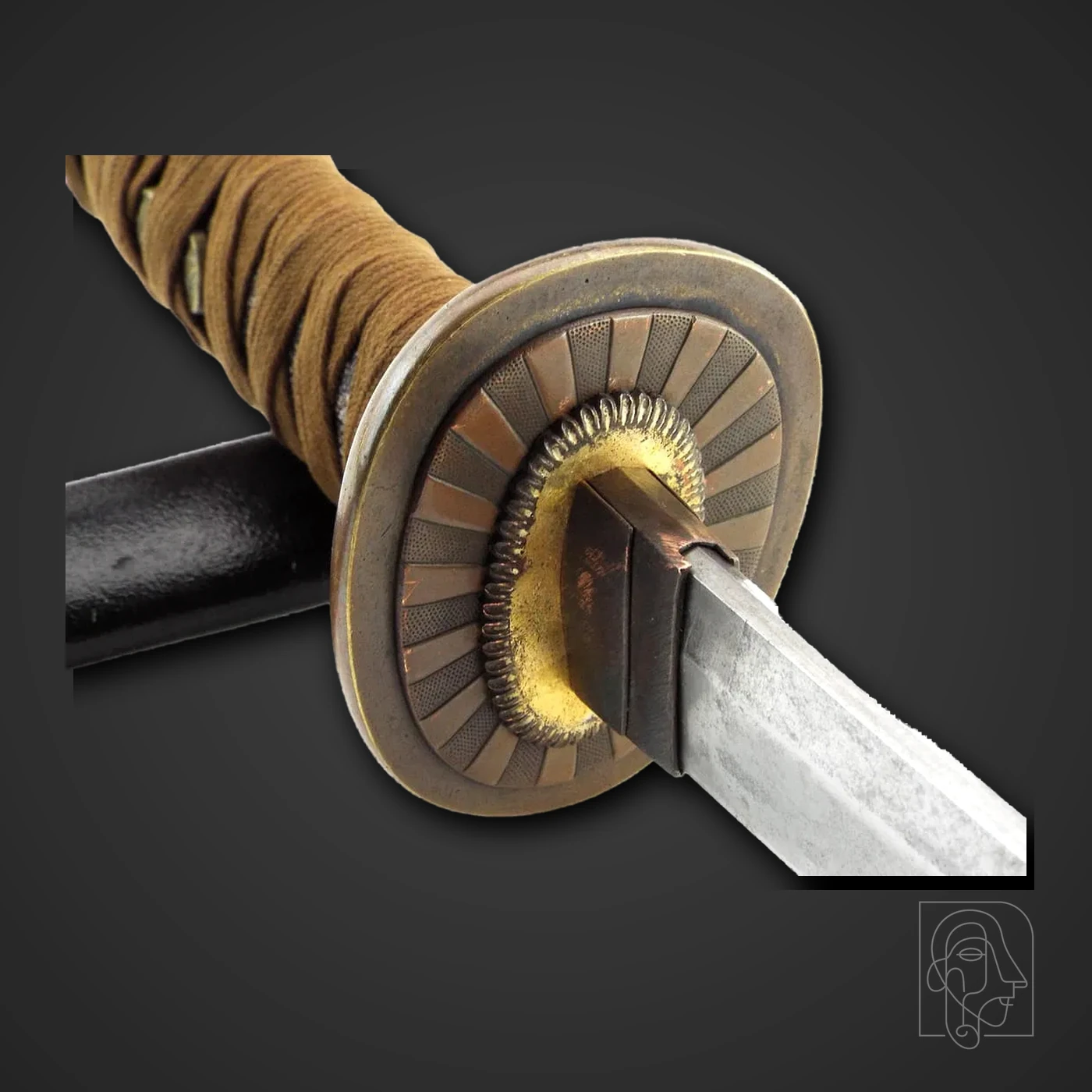
Extended description
Japanese signed blade in naval-style kai-guntō koshirae. The black-lacquer saya has gilt copper-alloy suspension fittings and floral ornament. The tsuka is recorded with brown textile ito, black samegawa panels and floral menuki. A radial military-pattern tsuba, seppa and copper-alloy habaki accompany the blade. Recorded blade features include shinogi-zukuri geometry, moderate sori, an extended kissaki, worn polish, oxidation and staining. The tang has yasurime, dark patination, two mekugi-ana and an inscription provisionally transcribed 肥前國吉次.
The recorded Hizen no Kuni Yoshitsugu reading is a signature reading, not a confirmed smith or school attribution. Premodern manufacture and traditional forging remain hypotheses. Blade and mounts may have different histories; no identified officer or earlier ownership chain is established.
Technical analysis
Recorded tang features include dark patination, yasurime, hand-cut inscription strokes and two mekugi-ana. The latter are compatible with altered mounting but do not establish a dated sequence. Blade form is recorded as shinogi-zukuri with moderate sori, oxidation, staining and worn polish. Possible hada and subdued hamon activity require specialist examination; manufacture method cannot be settled from these descriptions or stamp absence.
Mounts include a black lacquer saya, gilt floral fittings, military-pattern radial tsuba, suspension hardware and wrapped tsuka. Record components and their association with the blade independently. The collection's proposed c. 1937–1945 mounting date is a typological estimate.
Authentication methodology
Document the inscription diplomatically, character by character, with scaled raking-light photographs and an oshigata. Distinguish wording from attribution to an actual smith. Compare exact stroke forms, placement, yasurime, tang shape, workmanship and mounting changes against located published examples, considering alternative generations and gimei. Assess possible hada and hamon through specialist examination. Evaluate mounts separately. A signature or stamp absence does not confirm school, generation or traditional forging.
Comparative works
Research leads include publications and signed blades associated with Yoshitsugu, and documented naval-style kai-guntō mounts. The earlier assertion of a comparable NBTHK Tokubetsu Hozon blade lacks an exact certificate/object locator in the record and has not been independently verified here. Supply exact volume, page, oshigata, object identifier and certification details before assigning this blade to a generation or school.
Provenance
Recorded acquisition is through the secondary collectibles market; earlier ownership is undocumented. No surrender tag, family record, registration or direct military ownership document currently accompanies the sword. Two mekugi-ana suggest a possible mounting change without dating it or identifying an earlier owner. Neither mei nor naval-style fittings supplies a continuous provenance.
Historical context
Naval-style mounts supply twentieth-century military design context. Japanese military swords can incorporate blades and fittings made at different times, so mount style cannot settle this blade's date. The inscription's reported Hizen wording is a comparison lead. It does not establish a Tadayoshi-school lineage or identify the actual maker, wearer or service history.
Conservation history
No major conservation or restoration treatments are presently documented. Blade retains aged polish with visible oxidation, staining, and handling wear. Mounts exhibit lacquer loss, gilt wear, oxidation, textile fraying, and age-consistent deterioration. Current condition appears substantially stable. No evidence of aggressive modern polishing, recent artificial aging, or major reconstruction was identified during current examination. Future conservation recommendations include stabilized storage, humidity control, non-abrasive handling practices, and professional evaluation prior to any restoration or polish intervention.
Bibliography
Fujishiro, Yoshio. Nihon Tōkō Jiten. Sesko, Markus. Index of Japanese Swordsmiths. Nagayama, Kōkan. The Connoisseur’s Book of Japanese Swords. Fuller, Richard and Gregory, Ron. Military Swords of Japan 1868–1945. Dawson, Jim. Swords of Imperial Japan 1868–1945. NBTHK Token Bijutsu publications and comparative oshigata references. Selected comparative auction and collection records relating to signed 肥前国吉次 blades and WWII kai-guntō mountings.
Research status: general reference leads; exact volumes, pages, oshigata and object/certificate locators supporting a Yoshitsugu generation or Tadayoshi-school attribution have not been established.