Small Copper-Alloy Dish — Scholarly Analysis
Extended scholarly study of "Small Copper-Alloy Dish" (accession JCA.2025.004): material analysis, authentication methodology, comparative works, and bibliography.
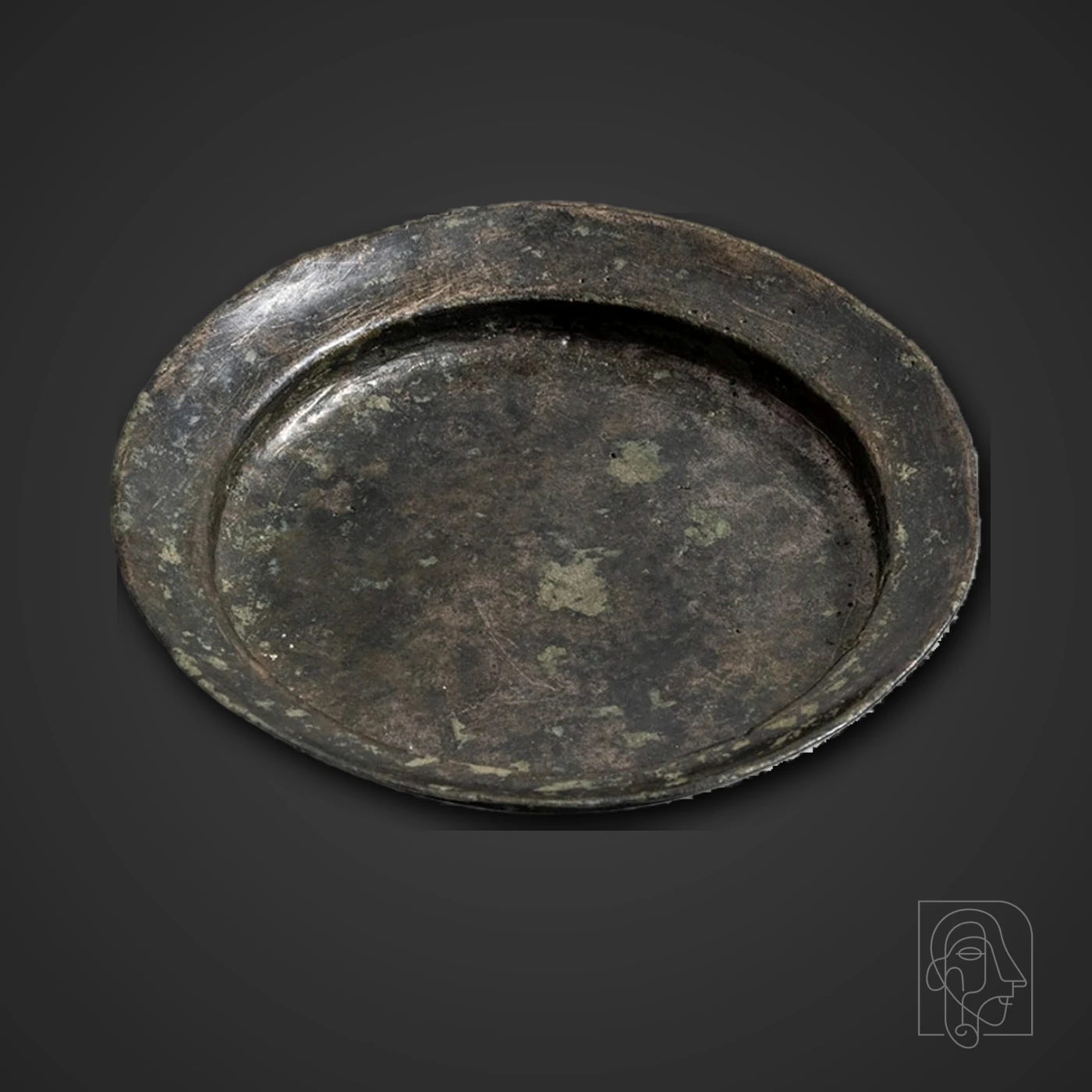
Extended description
JCA.2025.004 is a small shallow copper-alloy vessel approximately 10–13 cm in diameter, with a simple concave body and no currently recorded decoration or maker mark. Ancient Mediterranean bronze vessel comparanda are extremely broad: The Met preserves an Etruscan-or-Roman shallow bowl dated c.2nd century BCE–2nd century CE, Roman paterae of the early Imperial period, Classical Greek bronze bowls and earlier Etruscan/Cypriot forms. The JCA vessel lacks the handles, inscriptions, rims, feet or ornament that often help classify such objects, so a 3rd–6th-century date is not defensible from the current record.
Technical analysis
Establish whether the vessel is cast, hammered, spun/lathe-finished or made by a combination of processes. XRF should characterize alloy and any solder; microscopy should record hammering, turning, file marks, rim finishing, corrosion layers and possible modern machining. Wall-thickness mapping can help distinguish production technologies. Corrosion should be evaluated by a metals conservator rather than treated as automatic archaeological patina.
Authentication methodology
Record exact dimensions, weight, profile and wall thickness; photograph interior, exterior, rim and base under raking light; conduct non-destructive alloy analysis; inspect corrosion and tool marks microscopically; and compare the resulting manufacturing profile with securely provenanced ancient and later vessels. If the collection’s “acquisition history” includes invoices or prior-owner records, retrieve them before making antiquity claims.
Comparative works
The Metropolitan Museum of Art: “Bronze shallow bowl,” Etruscan or Roman, c.2nd century BCE–2nd century CE (21.88.127); “Bronze patera,” Roman, early 1st century CE (1989.281.87); Greek bronze bowl, 5th–4th century BCE (1992.11.67). The British Museum preserves Roman bronze paterae with diagnostic handles and maker inscriptions. These show both the breadth of the category and the diagnostic evidence absent from JCA.2025.004.
Provenance
Private collection; the public record says acquisition history is documented within collection records, but no earlier owner, source, date, lot, findspot, export history or archaeological context is presently exposed in the object record. Those internal records should be reviewed before any ancient-Mediterranean attribution is strengthened.
Historical context
Ancient shallow bronze vessels served multiple domestic, dining, bathing and religious functions, and closely related shapes can cross cultural and chronological boundaries. Without handle, inscription, decorative program or find context, function should not be narrowed to “ritual” merely because ancient paterae exist.
Conservation history
No formal treatment history is documented. Do not polish, acid-clean or mechanically strip green/brown corrosion before metal and corrosion characterization. Keep the vessel dry and stable; monitor any pale green powdery corrosion for activity. Document all surfaces before sampling or treatment.
Bibliography
The Metropolitan Museum of Art, bronze vessel records 21.88.127, 1989.281.87 and 1992.11.67; British Museum Roman bronze patera 1856,1226.828 for diagnostic manufacture/inscription comparison. These are broad typological references only and do not establish JCA.2025.004 as ancient.