Anthropomorphic Ceramic Figurine Whistle — Scholarly Analysis
Extended scholarly study of "Anthropomorphic Ceramic Figurine Whistle" (accession JCA.2026.014): material analysis, authentication methodology, comparative works, and bibliography.
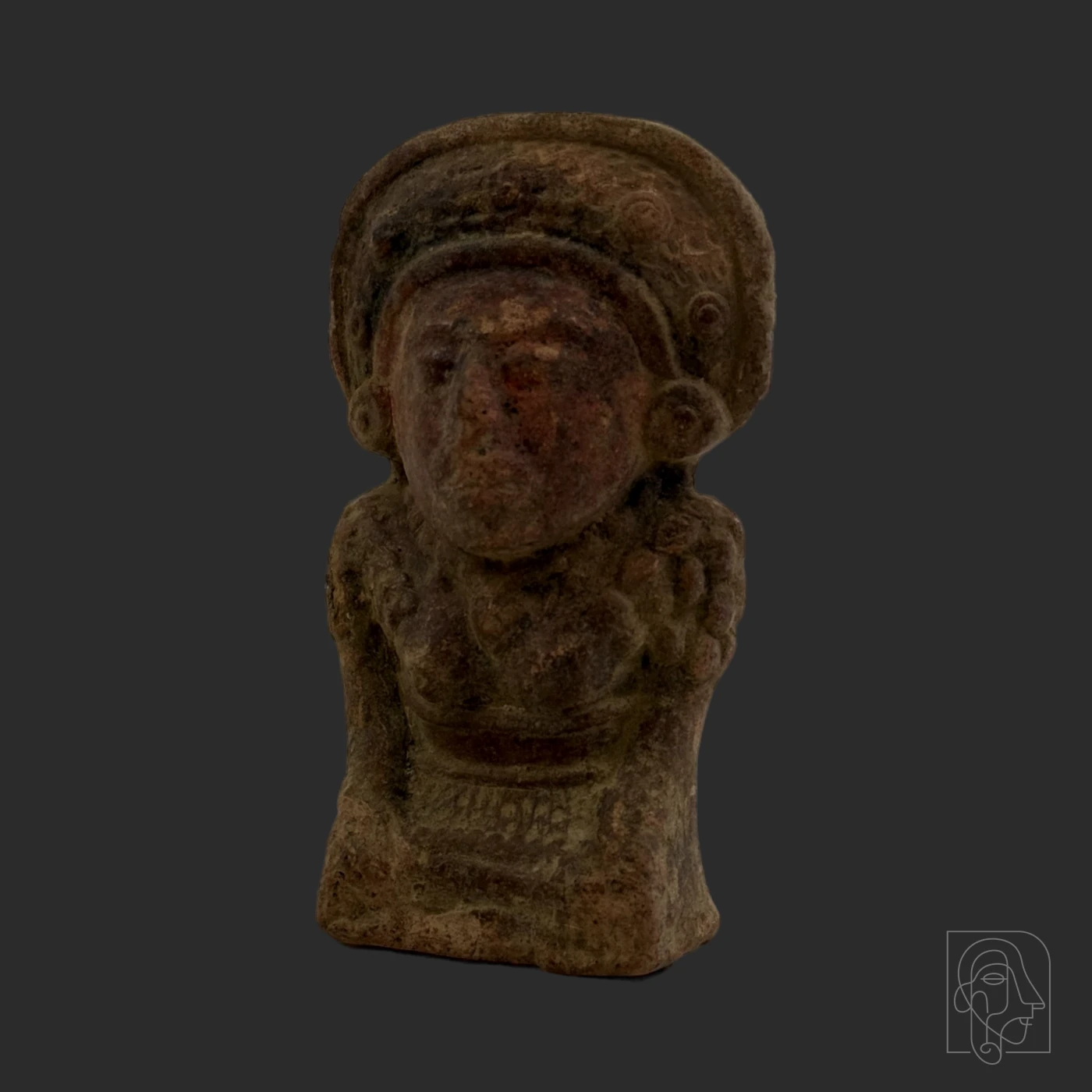
Extended description
JCA.2026.014 is a hollow, hand-modeled anthropomorphic earthenware figure approximately 14.8 cm high. Observable features include a broad applied headdress, large ear ornaments, a beaded or segmented collar, a central face-like pendant, forward-positioned arms, surviving red pigment in recessed areas, a round air inlet, an elongated voicing window/labium, and an open underside that affects pitch when covered. These features establish a deliberately made ceramic whistle. Comparable Maya material includes Classic and Late Classic anthropomorphic figurine-whistles from Belize, Petén, and Jaina-related traditions, but those comparanda vary in manufacturing method, iconography, and archaeological context. The JCA piece should therefore remain Mesoamerican/Maya-tradition possible rather than assigned to a named Maya region or social identity.
Technical analysis
The instrument appears to use a fipple or duct-whistle system: air enters through the recorded blowhole and is directed toward a voicing edge, while the hollow body functions as the resonating chamber. The open underside changes the acoustic volume and pitch when occluded. Construction is described as hand-modeled with applied ornament and coarse mineral temper, with no mold seam observed. Those observations can help distinguish this piece from many mold-made Jaina-style figurines, but hand modeling is not a chronological test. Surface accretion, red pigment survival, oxidized exterior/reduced core, and a functional whistle mechanism are compatible with antiquity but can all be reproduced or altered after manufacture.
Authentication methodology
Authentication should proceed from independent material tests rather than stylistic confidence. Recommended sequence: thermoluminescence sampling from a discreet, uncontaminated ceramic area; petrographic thin section or other mineralogical characterization to assess fabric and possible geological sourcing; non-destructive XRF/Raman study of surviving pigment where useful; and high-magnification inspection of breaks, bore/airway surfaces, accretions, and tool marks. Current photographs should document all sides, the base/opening, air inlet, voicing window, interior where accessible, and the PF 5673 label. Acoustic function is evidence of design only and must not be used as proof of ancient manufacture.
Comparative works
The British Museum catalogues multiple Classic and Late Classic Maya figurine-whistles from Lubaantun, Toledo District, and Petén. The Metropolitan Museum of Art documents Jaina-style anthropomorphic whistles/figurines whose production often combines molds with hand-added detail, and also preserves Maya ceramic whistles from the seventh to ninth centuries. These comparanda establish that anthropomorphic ceramic whistles are a genuine Maya material category, while their differences in manufacture and context show why JCA.2026.014 cannot be assigned to Jaina, Petén, a specific Maya polity, or a precise date from visual similarity alone.
Provenance
An oval paper label inside the base bears “PF 5673” and is provisionally interpreted as a dealer inventory label associated with Barakat Gallery. That association remains to be confirmed from dealer records. JCA Archives acquired the object at auction. No excavated findspot, pre-1970 ownership chain, export permit, archaeological publication, or source-country documentation is currently established. The label is evidence of modern collection history.
Historical context
Ceramic whistles and figurines were used in multiple Mesoamerican settings, and Maya examples occur in both habitation and burial contexts. Museum records demonstrate a wide repertoire of human, animal, and supernatural subjects. That broader archaeological record does not establish who used this individual whistle, whether it was made or played by women, whether it belonged to a child or adult, whether it functioned in household or ritual performance, or whether it was deposited in a tomb. Those former specific claims have therefore been removed from the object-level interpretation.
Conservation history
No formal treatment history is documented. The instrument should not be repeatedly played, blown into, washed, soaked, or subjected to aggressive cleaning because moisture and handling can disturb pigments, salts, accretions, and fragile ceramic surfaces and can contaminate future TL or materials sampling. Support the open base and protruding applied ornaments during storage. Record all existing accretions and pigment before any conservation intervention, and coordinate any sampling with a conservator and laboratory.
Bibliography
British Museum Collections Online: Classic and Late Classic Maya “whistle; figurine” records from Lubaantun, Toledo District, Petén and related contexts. Metropolitan Museum of Art: Maya “Figure with conical headdress and shield” (Jaina style, discussing mold-made figurines and anthropomorphic whistles); “Double Whistle,” Maya, 7th–9th century; “Crocodile whistle and rattle,” Maya, 700–800 CE. These sources are used as typological comparanda, not provenance for JCA.2026.014.