Dunhill Rollagas Pocket Lighter, Diagonal Crosshatch Finish — Scholarly Analysis
Extended scholarly study of "Dunhill Rollagas Pocket Lighter, Diagonal Crosshatch Finish" (accession JCA.2026.059): material analysis, authentication methodology, comparative works, and bibliography.
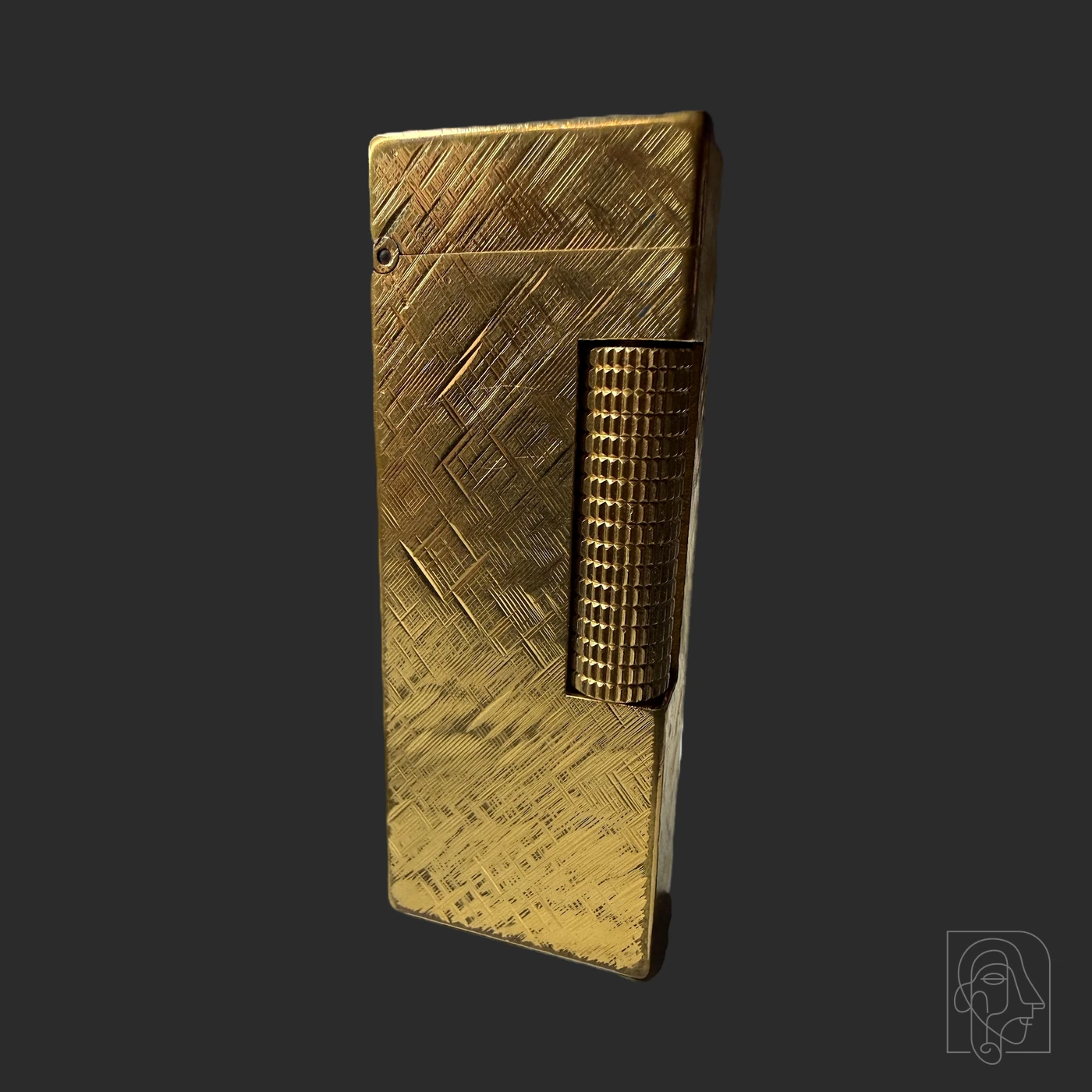
Extended description
This object is a Dunhill Rollagas butane pocket lighter of rectangular form, manufactured in Switzerland and finished in a gold-tone plated surface with a diagonal engine-turned crosshatch pattern. The exterior decoration consists of intersecting engraved lines applied through precision machining, creating a repeating geometric surface distinct from both smooth and hand-worked finishes. The lighter features a hinged lid, side-mounted flint wheel, and internal butane reservoir within a compact mechanical assembly. The base bears the marks “dunhill,” “MADE IN SWITZERLAND,” and “US RE 24163 PATENTED,” consistent with mid-century Rollagas production. The surface pattern remains clearly visible despite moderate wear, and the lighter retains full structural integrity and functionality.
Technical analysis
The lighter is constructed from a brass substrate with a gold-tone plated finish. The exterior pattern is produced through engine-turning, a precision machining process that creates uniform decorative textures. Internal components include a butane reservoir, flint ignition system, spring-loaded lid mechanism, and fuel delivery assembly typical of Dunhill Rollagas construction. The base incorporates a refill valve and adjustment mechanism marked with directional indicators. The flint wheel and ignition assembly display machining characteristics consistent with period production. Surface wear patterns, including minor plating loss and oxidation in recessed areas, are consistent with long-term handling and use.
Authentication methodology
Authentication is based on comparative typological analysis and physical examination. The presence of the Dunhill maker’s mark, Swiss manufacture designation, and U.S. Reissue Patent No. 24163 aligns with known authentic Rollagas examples. Construction details, including the butane system and ignition mechanism, correspond to documented Dunhill manufacturing standards. The engine-turned crosshatch pattern is consistent with known decorative variants and does not exhibit irregularities associated with modern reproduction. Wear patterns and patina are appropriate for age. No invasive testing has been conducted.
Comparative works
Comparable examples include Swiss-manufactured Dunhill Rollagas lighters with engine-turned finishes produced during the mid-20th century. These are frequently encountered in grid, barley, and crosshatch variants. Diagonal crosshatch examples occupy a middle tier of decorative complexity within Dunhill’s production range and are documented in private collections and secondary market offerings.
Provenance
The object forms part of the Joshua Cabinet of Antiquities collection and was acquired within a grouped purchase of vintage Dunhill lighters. No additional ownership documentation is available. The grouping context suggests prior accumulation within a private collection.
Historical context
The Rollagas lighter represents a key development in postwar consumer technology, marking the widespread adoption of butane as a cleaner and more reliable fuel source compared to earlier petrol-based systems. Dunhill’s use of Swiss manufacturing reflects a broader reliance on precision engineering centers in Europe during this period. Decorative surface treatments such as engine-turned patterns reflect mid-century design priorities emphasizing texture, craftsmanship, and visual refinement. These objects served both functional and symbolic roles, signaling taste and status within mid-20th-century consumer culture.
Conservation history
The lighter exhibits moderate wear consistent with age, including surface abrasions, minor plating loss, and oxidation within recessed decorative areas. The structural components remain intact, and the mechanism is functional. No significant restoration or conservation treatment has been performed beyond standard handling.
Bibliography
Comparative analysis based on known Dunhill Rollagas production examples and mid-20th-century industrial design practices. No direct archival or catalog reference specific to this object has been identified.