Glazed Scarab-Form Amulet with Fish Motif — Scholarly Analysis
Extended scholarly study of "Glazed Scarab-Form Amulet with Fish Motif" (accession JCA.2026.093): material analysis, authentication methodology, comparative works, and bibliography.
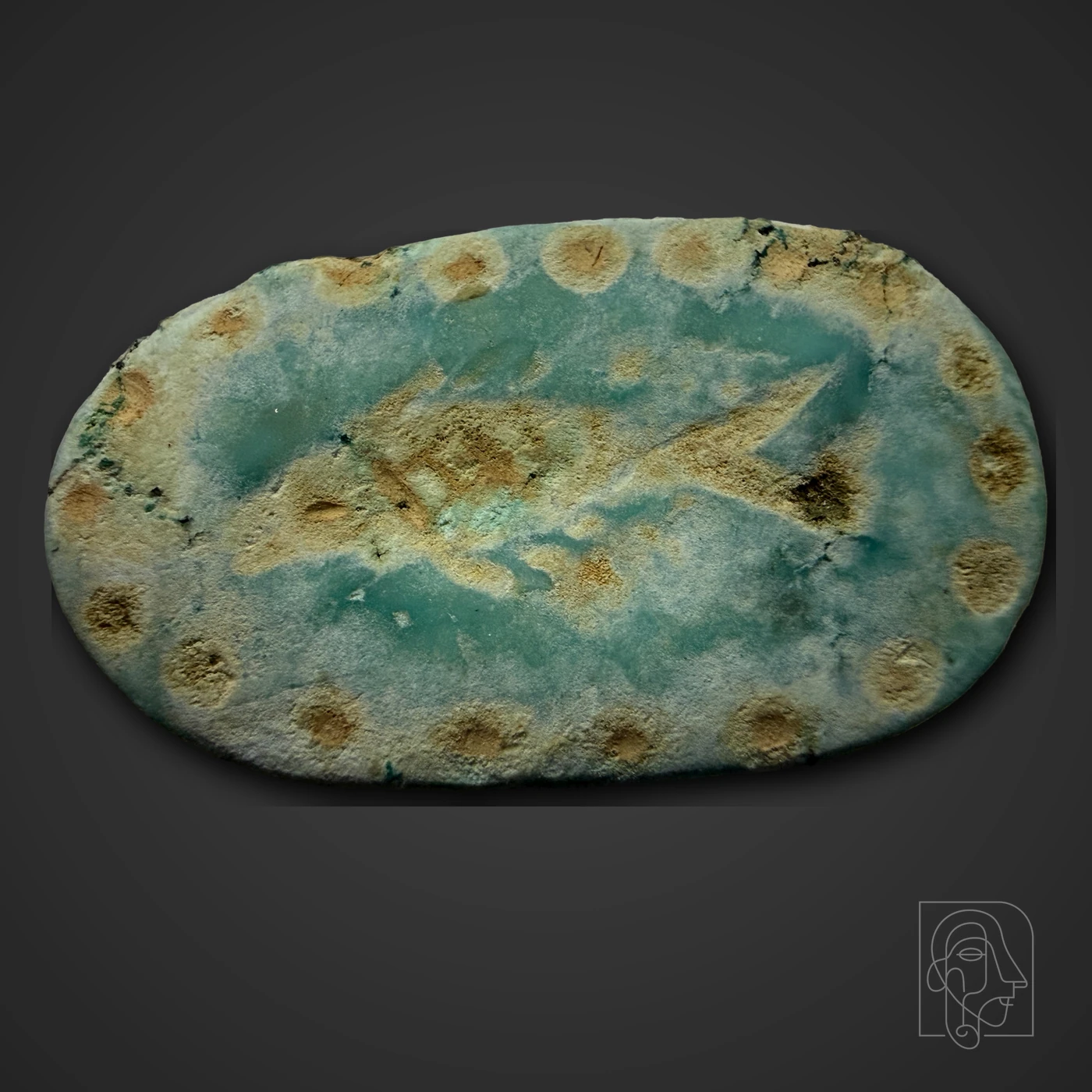
Extended description
JCA.2026.093 is a blue-green glazed scarab/scaraboid approximately 19 × 11 × 9 mm with a longitudinal perforation, domed beetle-form back and a flat underside bearing a profile fish within a dotted border. The exposed tan core, patchy surviving glaze, accretions and worn high points are observable material features. A particularly close dimensional and thematic comparator is The Metropolitan Museum of Art object 22.1.452, a green glazed faience scarab with fish from the New Kingdom, ca. 1479–1080 BCE, measuring 1.9 × 1.0 × 0.7 cm. Other Met fish-scarab examples fall in Dynasty 18/New Kingdom ranges. The comparison is strong for type and scale but does not authenticate the JCA object.
Technical analysis
The object appears to be a glazed composition or faience-like body with a pale/tan core and surviving blue-green surface glaze. The longitudinal bore is recorded as irregular, with rounded edges and deposits extending toward the opening. Those features merit microscopic study because ancient drilling, glaze/core transitions, weathering and later cleaning can leave different traces. No species identification should be made from the current fish carving alone. Material analysis should distinguish true Egyptian faience/glazed composition from later ceramic or synthetic imitations.
Authentication methodology
Obtain calibrated macro photography of the top, sides, underside design, both bore mouths and as much of the bore interior as possible. Examine the glaze/core interface, bubbles or quartz-rich texture, engraving sequence, wear within the perforation, accretion stratigraphy and any modern abrasive/tool traces under magnification. Non-destructive XRF can characterize colorants but will not alone date the piece; SEM/EDS or Raman may assist material characterization if conservation access permits. Provenance documentation and specialist scarab comparison remain essential. Do not clean the bore or accretions before examination.
Comparative works
The Metropolitan Museum of Art, object 22.1.452, “Scarab with the Representation of a Fish,” green glazed faience, New Kingdom ca. 1479–1080 BCE, measures 1.9 × 1.0 × 0.7 cm and notes that fish are a popular New Kingdom scarab theme but species are not always identifiable. Met objects 10.130.661 (“Scarab with a Fish and Plants,” Dynasty 18?, ca. 1550–1295 BCE) and 10.130.780/10.130.782 (faience fish scaraboids, Dynasty 18) provide additional thematic comparanda.
Provenance
Purchased at auction in the United States. No auction house, lot, sale date, earlier collection, excavation history, export permit, pre-1970 ownership chain or source-country documentation is currently published in the catalogue. Egyptian origin is therefore an attribution from object type, not documented provenance.
Historical context
Scarabs and scaraboids served as seals, amulets and personal objects across long periods of Egyptian history. New Kingdom examples employ a wide range of underside motifs, including fish, plants, divine images and symbols. The recurrence of fish imagery supports a New Kingdom typological comparison for JCA.2026.093, but iconographic symbolism varies and cannot reconstruct the original owner, function, findspot or intended protection of an unprovenanced object.
Conservation history
No formal treatment history is documented. Do not soak, descale, polish, mechanically clear the bore or remove the pale accretions, glaze remnants or exposed core. Store in a small inert tray or mount that prevents abrasion of the glazed surfaces. If analysis is undertaken, document every surface and bore mouth before sampling or cleaning because accretions and wear are part of the authentication evidence.
Bibliography
Metropolitan Museum of Art: object 22.1.452, “Scarab with the Representation of a Fish,” New Kingdom ca. 1479–1080 BCE; object 10.130.661, “Scarab with a Fish and Plants,” Dynasty 18?, ca. 1550–1295 BCE; objects 10.130.780 and 10.130.782, faience fish scaraboids, Dynasty 18. Museum notes are used for typology, chronology and iconographic caution, not as authentication of JCA.2026.093.